
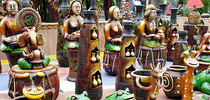
From Scrap Metal to Art: How Rajasthan's Craftspeople Reimagine the Everyday
, by Vipul Sharma, 21 min reading time
, by Vipul Sharma, 21 min reading time

There's a workshop in the heart of Rajasthan where discarded oil drums become elephants.
Where rusted bicycle chains transform into roosters. Where bent nails, old gears, and forgotten washers are welded into peacocks that seem ready to spread their tails and take flight.
This is not recycling in the conventional sense — sorting plastic bottles into bins or crushing aluminium cans. This is alchemy. This is what happens when centuries-old metalworking mastery meets modern environmental crisis, and artisans decide that waste is simply raw material waiting for imagination.
In a world drowning in discarded metal — where 400 million tons of industrial scrap are generated globally each year — Rajasthan's metal artisans are proving that sustainability doesn't have to look like sacrifice. It can look like a hand-hammered bird perched on driftwood. Like a lattice-carved lamp made from salvaged sheet metal. Like a pen holder shaped like a village stove, crafted from scraps that would have otherwise rusted in a junkyard.
This is the story of how India's metalworking heritage — a craft so significant it earned UNESCO recognition — is being reborn through scrap, welding torches, and artisans who see beauty where others see trash.

Rajasthan has always been a land of metal.
Copper mines in Khetri. Iron forges in Jodhpur. The brass workshops of Jaipur, where artisans have hammered, chased, and engraved metal for centuries. This is where intricate jaali lattice work was perfected — the perforated screens that filter light in palaces and temples. Where Thokri work (repousse) brought flowers to life on brass vessels. Where koftgari artisans once inlaid gold and silver into iron swords for Maharajas.
Metal craft in Rajasthan isn't a recent trend. It is embedded in the region's DNA.
But here's what makes the current generation of Rajasthani metalworkers extraordinary: they haven't just inherited technique. They've inherited resourcefulness. In a state where water is scarce, wood is precious, and nothing goes to waste, artisans learned long ago to work with what was available — not what was ideal.
So when industrialization flooded India with scrap metal — discarded machinery, old vehicles, factory off-cuts — Rajasthan's metalworkers didn't see pollution. They saw possibility.

Before we talk about scrap metal art, we need to talk about the foundation beneath it: the Thathera tradition.
In 2014, UNESCO inscribed "Traditional brass and copper craft of utensil making among the Thatheras of Jandiala Guru, Punjab" on its Representative List of the Intangible Cultural Heritage of Humanity. This made it India's first and only metal craft to receive this recognition.
The Thathera are a community of metalworkers who have been hammering copper and brass sheets into vessels for centuries. Their craft was encouraged by Maharaja Ranjit Singh in the 19th century, who invited skilled artisans from Kashmir to settle in Punjab and supply his royal kitchens with handcrafted utensils.
The process is mesmerizing:
This is not factory work. This is oral tradition — knowledge passed father to son, generation to generation, for over ten generations. For the Thathera, metalwork is not just livelihood. It defines family structure, work ethic, and social identity.
But by the early 2000s, the craft was dying. Cheap steel and aluminium utensils flooded markets. Middlemen exploited artisans. Young people abandoned the workshops. By 2018, only 40 families in Jandiala Guru were still practicing the craft — down from over 500 a century earlier.
Enter initiatives like P-TAL (Punjabi Thathera Art Legacy), which began working with artisans to modernize designs, eliminate middlemen, and create fair-trade partnerships. Today, around 65 families are back at work, earning livable wages, and passing skills to the next generation.
This revival matters because the Thathera tradition is the bedrock of India's modern scrap metal art movement. The hammering techniques, the welding knowledge, the understanding of how heat transforms metal — all of this inherited mastery is now being applied to salvaged materials, breathing new life into both ancient craft and discarded waste.

Walk into a scrap metal workshop in Rajasthan today, and you'll see something remarkable:
Piles of rusted chains. Discarded gears from old machinery. Bent nails. Oil drum lids. Bicycle parts. Washers, bolts, spark plugs, springs — the debris of industrialization, sorted and stacked like an artist's palette.
These aren't materials purchased from suppliers. They're salvaged from junkyards, auto repair shops, and factory waste streams. Artisans pay by weight — pennies per kilogram — for metal that would otherwise end up in landfills or be melted down in energy-intensive recycling facilities.
Then, the transformation begins.

Creating scrap metal art requires two seemingly contradictory skills: technical precision and wild imagination.
First, the artisan envisions the final form — a bird, an elephant, a human figure. Then comes the hunt: which pieces of scrap metal will become which body parts? A spark plug might become a torso. A bicycle chain becomes a tail. Washers become eyes. Old springs become feathers.
The pieces are cleaned, sometimes cut or bent into shape, then welded together using MIG or arc welding techniques. This is where inherited metalworking knowledge becomes critical — understanding which metals can be joined, at what temperature, with what flux. A poorly welded joint will break. A skilled one will last generations.
Once assembled, the sculpture is cleaned again, sometimes painted (using lead-free metallic paints), sometimes left raw to show its industrial origins. The goal is not to hide the fact that this was once scrap. The goal is to celebrate it.
Many of Rajasthan's scrap metal artisans come from traditional metalworking families — the Thathera, the Lohar (blacksmiths), and other communities who have worked with metal for centuries. But unlike their fathers and grandfathers who made utilitarian objects, this generation is making art.
They're creating:
This shift from craft to art has been driven partly by market demand, partly by necessity, and partly by a new generation of artisans who studied design, visited galleries, and realized that their inherited skills could create something unprecedented: sustainable luxury.
Let's talk numbers.
Every kilogram of recycled steel saves:
Every kilogram of recycled copper saves:
But here's what makes scrap metal art even more sustainable than conventional recycling: it extends the useful life of materials without re-melting them.
When metal is recycled industrially, it's melted down in furnaces that consume enormous energy, even if less than virgin production. When an artisan transforms scrap into sculpture, the only energy used is for welding — a fraction of the industrial footprint.
This is called upcycling — creating something of higher value from waste, with minimal additional processing. Scrap metal art doesn't just prevent landfill waste. It creates heirloom-quality objects from materials that were destined for destruction.
Scrap metal artisans typically work in small workshops — family businesses, cooperative studios, or solo operations. They:
Compare this to mass-produced plastic décor:
Scrap metal art, on the other hand:
When you buy scrap metal art from Rajasthan, you're supporting:
This isn't just about preventing waste. It's about preserving living culture while addressing contemporary environmental crises.
There's something viscerally honest about scrap metal art.
You can see the welds. You can identify the parts — "That's a bicycle chain. That's a gear. That's a washer." The metal shows its history: rust patina, scratches, the ghosts of previous lives.
This is not polished perfection. This is wabi-sabi for the industrial age — finding beauty in imperfection, age, and transformation.
Some artisans lean into this aesthetic, leaving metal unfinished to show its raw, salvaged origins. Others paint their creations in vibrant folk art colors, transforming industrial debris into joyful, whimsical sculptures. Both approaches honor the material's past while celebrating its present.
And here's why this matters aesthetically:
In a world of identical IKEA furniture and mass-produced décor, scrap metal art is defiantly unique. No two pieces are exactly alike because no two collections of scrap are identical. The artisan works with what's available — and what's available changes daily.
This means:
When you place a scrap metal bird on your shelf, you're not just decorating. You're making a statement: I value what's real over what's perfect. I choose story over sterility. I believe that beauty can come from unexpected places.
Scrap metal art exists globally — from Mexican artisan Armando Ramírez to European studio sculptors. So what makes Rajasthan's version distinctive?
Rajasthan's artisans aren't learning metalwork from YouTube. They're inheriting techniques refined over centuries. The hammering precision from Thathera tradition. The lattice-cutting from jaali work. The surface treatment from brass engraving. This foundation allows them to create scrap metal art with a level of technical sophistication that newcomers to the craft can't match.
Many Rajasthani scrap metal pieces incorporate traditional folk art aesthetics — bright colors, dotted patterns, animal motifs that echo centuries of textile, pottery, and painting traditions. A scrap metal peacock from Rajasthan doesn't just look industrial. It looks Indian — connected to a broader visual language of celebration, symbolism, and vibrant cultural expression.
Rajasthani artisans rarely create "art for art's sake." Even their most sculptural pieces tend to be functional — hook rails, pen holders, candle stands, planters. This reflects a cultural value: beauty should serve life, not just decorate it. Scrap metal art from Rajasthan is meant to be used, touched, integrated into daily rituals.
Unlike solo studio artists, many Rajasthani scrap metal artisans work in communities — families, cooperative workshops, or clusters where techniques are shared and refined collectively. This creates consistency in quality while allowing individual creativity to flourish.
Every piece of scrap metal art has a previous life. Here are some of the materials commonly used by Rajasthani artisans:
When you know what your piece used to be, it deepens the story. That peacock was once a motorcycle. That hook rail held together a factory machine. Now, they hold your keys, your scarves, your everyday essentials — transformed from industrial debris to domestic art.
One of the greatest advantages of scrap metal art? It's nearly indestructible.
That's it. No special treatments. No delicate handling. Scrap metal art is built to last, just like the industrial materials it came from.
Choosing scrap metal art isn't just about aesthetics. It's about aligning your home with your values.
When you bring a piece of Rajasthani scrap metal art into your space, you are saying:
I refuse disposability. My home is not a showroom for mass production. I choose objects that last, that mean something, that carry history.
I value artisan livelihoods. I want my money to support families and communities, not faceless corporations.
I believe waste can be transformed. I see potential where others see trash. I celebrate ingenuity, resourcefulness, and creativity.
I honor heritage. I recognize that ancient metalworking traditions deserve to evolve, not disappear. I support artisans who are bridging past and present.
I choose beauty that tells a story. My décor doesn't just fill space. It sparks conversation, invites questions, and connects me to the hands that made it.
Scrap metal art from Rajasthan is not perfect. It's not polished. It's not trying to look like something it's not.
And that's exactly why it belongs in homes that value authenticity over aspiration.
If you're ready to add the sustainability and artistry of scrap metal to your home, start with pieces that serve daily functions:
And remember: Authentic scrap metal art is never mass-produced. If you see identical pieces by the dozens, it's factory-made. Real scrap metal art varies piece to piece because the source materials vary. This uniqueness is part of the value.
When you pay for handmade scrap metal art, you're paying for:
The world produces enough metal.
In fact, it produces too much — mining operations that scar landscapes, smelting facilities that belch emissions, landfills overflowing with discarded machinery.
We don't need more virgin metal. We need imagination applied to what already exists.
That's what Rajasthan's scrap metal artisans offer: proof that waste is not an endpoint. It's a beginning. A bicycle chain can become a rooster. An oil drum can become an elephant. Rusted gears can become a peacock that seems ready to fly.
This is sustainability that doesn't ask you to sacrifice beauty.
This is heritage that refuses to become obsolete.
This is art that proves resourcefulness is the highest form of creativity.
So choose the scrap metal bird over the plastic figurine.
Choose the welded pen holder over the resin organizer.
Choose transformation over production.
Choose artistry that came from junkyards and now lives in your home, carrying stories of what was, what could have been lost, and what was saved through human hands and imagination.
Looking to bring the sustainability and artistry of Rajasthan's scrap metal craft into your home? Explore our curated collection of hand-welded, upcycled metal art — each piece a celebration of ancient technique meeting modern environmental consciousness.
Subscribe to our emails